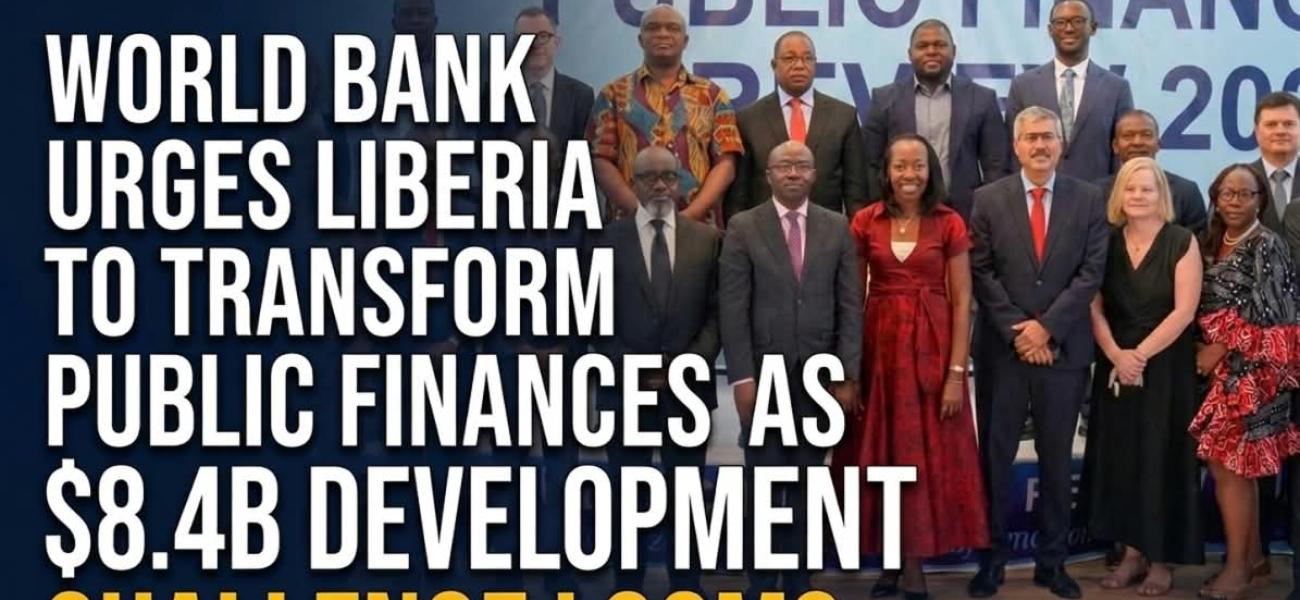
MONROVIA, Liberia-The World Bank is calling on Liberia to move beyond fiscal stabilization and embark on a broader transformation of its public finances as the country faces an estimated US$8.4 billion financing requirement for key development priorities over the next five years.
World Bank Group Country Manager for Liberia, Georgia Wallen, made the call Monday at the launch of the Liberia Public Finance Review 2026, held under the theme, “From Stabilization to Fiscal Transformation.”
Wallen commended the Liberian government for making progress in strengthening macroeconomic and fiscal stability, noting improvements in economic growth, a significant reduction in the fiscal deficit and a decline in public debt.
“These achievements reflect proactive policy choices and sustained commitment,” Wallen said, describing the progress as an important foundation for advancing Liberia’s development ambitions.
According to her, the Public Finance Review examines how Liberia can transition from fiscal stabilization to fiscal transformation by mobilizing additional domestic resources, improving public spending and strengthening the management of fiscal risks.
She said the transition is particularly important as Liberia approaches the target date for Vision 2030 and implements the ARREST Agenda for Inclusive Development (AAID).
The AAID’s priorities, which include infrastructure, human capital development, economic transformation, governance and inclusive development, are estimated to require approximately US$8.4 billion over five years.
Wallen said the key challenge is determining how Liberia can create sufficient and sustainable fiscal space to finance those priorities.
World Bank Identifies Four Major Opportunities
Wallen outlined four major areas where Liberia could strengthen its fiscal position.
The first is increasing domestic revenue collection from the existing tax base.
She said Liberia already has important foundations for this effort, including the Revenue Code, Medium-Term Revenue Strategy and ongoing tax administration reforms.
The World Bank estimates Liberia’s tax gap at approximately 3 percent of GDP, indicating that additional revenue could be generated through improved compliance and enforcement, greater use of technology and better management of tax expenditures, rather than relying mainly on increased tax rates.
Wallen also identified the implementation of the value-added tax and further deployment of the Integrated Tax Administration System as important steps toward improving domestic revenue mobilization.
The second opportunity is ensuring that Liberia gains greater development benefits from its natural resources, particularly the mining sector.
According to the World Bank, mining revenues increased fivefold over the past decade, rising from approximately US$27 million in 2016 to US$141 million in 2025.
Wallen said Liberia could further increase the fiscal contribution of the mining sector through improved information systems, stronger revenue administration, enhanced auditing capacity and better coordination among institutions responsible for overseeing the sector.
The third opportunity is improving the efficiency and impact of public expenditure.
Wallen said Liberia’s substantial fiscal adjustment in recent years should now be matched by stronger attention to the quality and effectiveness of government spending.
“Creating fiscal space is not simply about mobilizing additional revenue,” she said. “It is also about ensuring that scarce public resources generate the greatest possible development return.”
She identified better preparation and execution of public projects, stronger procurement and payroll management, and improved coordination between domestically and externally financed investments as key areas for reform.
The fourth opportunity is protecting the fiscal gains already achieved.
Wallen called for stronger oversight of state-owned enterprises, prudent debt management and improved management of contingent liabilities to help safeguard Liberia’s fiscal space.
She also urged policymakers to take greater account of commodity price fluctuations and climate-related risks when planning and managing public finances.
Reforms Could Generate Billions in Additional Fiscal Space
The World Bank estimates that sustained implementation of the proposed reforms could generate annual fiscal gains equivalent to between 3.9 percent and 5.3 percent of GDP by 2030.
Wallen said the additional fiscal space could help Liberia finance critical development needs, including roads, electricity, healthcare, education and climate resilience.
She stressed that fiscal reforms should ultimately translate into tangible improvements in the lives of ordinary Liberians, including increased employment opportunities and a better quality of life.
“Liberia has shown that fiscal stabilization is achievable,” Wallen said. “Building on that achievement, the opportunity now is to turn greater fiscal space into better development outcomes for the Liberian people.”
She emphasized that Liberia does not have to begin the transformation from scratch, pointing to the progress already made in stabilizing the country’s fiscal position as a platform for deeper reforms and long-term development.