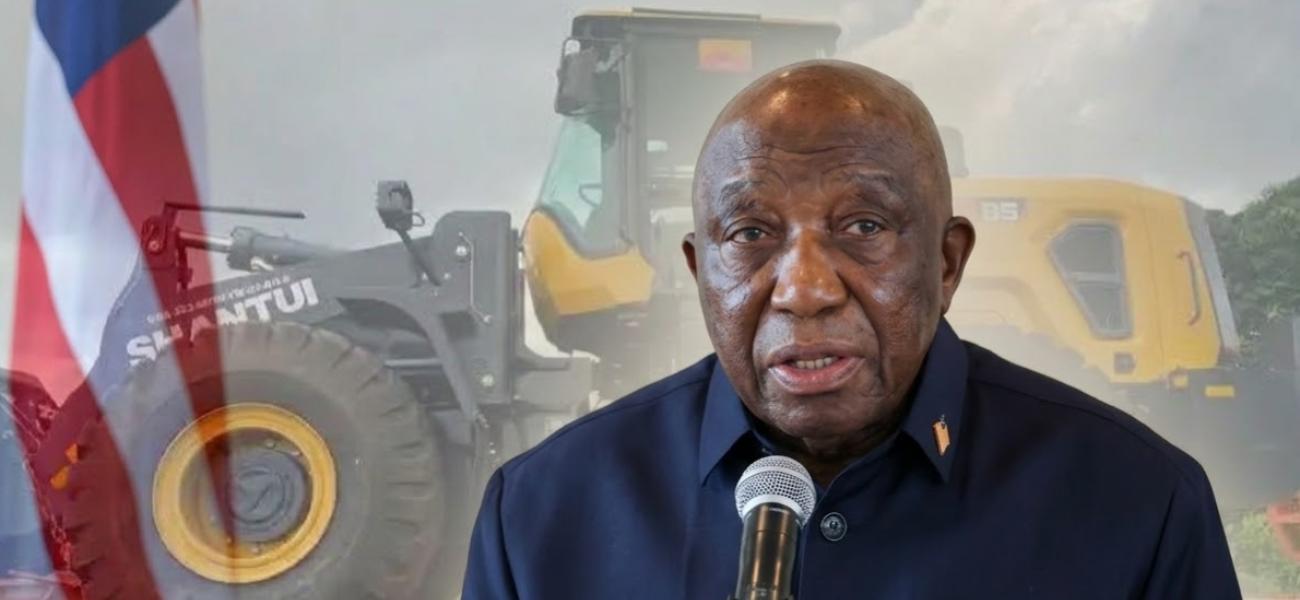
PAYNESVILLE, Liberia, November 16, 2026 – In a landmark ceremony that signals a decisive shift in Liberia’s infrastructure and agricultural development strategy, President Joseph Nyuma Boakai on Monday officially launched the nationwide deployment of 285 pieces of heavy earthmoving and support equipment—popularly referred to across the nation as the "Yellow Machines." Held in Paynesville before an audience of senior government officials, county superintendents, lawmakers, traditional leaders, farmers, and members of the diplomatic corps, the rollout represents one of the most ambitious state-led investments in rural connectivity in Liberia's post-war history. The fleet, comprising excavators, bulldozers, motor graders, front-end loaders, vibratory rollers, dump trucks, and mobile service units, is designed to systematically overhaul the country’s dilapidated interior road network and unlock the agricultural potential of its farming communities.
Coordinated through the Special Presidential Project Coordinating Committee (SPPCC), the deployment is structured around a decentralized operational framework featuring 19 strategically positioned operational hubs spread across all 15 political subdivisions of Liberia. Rather than centralizing equipment in Monrovia—a practice that historically delayed emergency road repairs and drove up logistical costs—the 19-hub model places machinery, fuel depots, spare parts inventories, and rapid-response mechanical teams directly within regional zones. Larger counties with expansive landmass and dense feeder road networks, such as Nimba, Bong, and Lofa, have been integrated into multi-hub coverage zones to ensure that heavy equipment can reach remote districts without facing protracted transit delays.
Addressing the gathering in Paynesville, President Boakai framed the initiative not merely as a procurement milestone, but as a foundational pillar of his administration's broader national development agenda, the ARREST (Agriculture, Roads, Rule of Law, Education, Sanitation, and Tourism) framework. He emphasized that for decades, the lack of reliable all-weather roads has functioned as a structural barrier to economic growth, trapping rural populations in cycles of subsistence living while depriving urban centers of locally grown staple foods. By bringing mechanized road-building capacity directly to the county level, the government aims to bridge the widening infrastructure gap between Liberia’s coastal capital and its agrarian heartland.
According to the President, the Yellow Machines Project is specifically calibrated to resolve the chronic logistical bottlenecks that have crippled Liberia’s agricultural value chain. Across rural counties, smallholder farmers routinely suffer devastating post-harvest losses—often estimated at up to 40 percent for perishable crops—because impassable roads prevent them from transporting cassava, rice, plantains, vegetables, and cash crops like cocoa and palm oil to commercial markets. Consequently, farmers are frequently forced to sell their harvests at depressed farm-gate prices to middlemen, while urban consumers in Monrovia and regional capitals bear the brunt of inflated food prices driven by exorbitant transport fares and reliance on imported foodstuffs.
President Boakai highlighted how the deterioration of rural corridors becomes especially acute during Liberia’s heavy rainy season, which spans roughly from May to October. During these months, unpaved laterite roads turn into treacherous stretches of deep mud, washed-out culverts, and collapsed wooden bridges, effectively severing entire districts from the rest of the country. Beyond commerce, the President noted that this seasonal isolation carries severe human costs: pregnant women struggle to reach clinics for emergency obstetric care, patients with treatable illnesses face life-threatening delays, teachers are unable to report to rural schools, and agricultural extension officers cannot deliver vital inputs such as seeds and fertilizers to farming cooperatives.
To reverse these trends, the newly deployed fleet will focus on the comprehensive rehabilitation, grading, widening, drainage improvement, and routine maintenance of feeder roads, farm-to-market corridors, and vital secondary highways. Engineering teams attached to the regional hubs will prioritize clearing overgrown road shoulders, excavating side drains to prevent waterlogging, installing durable concrete culverts, and compacting laterite surfaces to withstand heavy rainfall. By establishing reliable year-round access, the initiative is expected to lower vehicle operating costs, encourage private transport operators to service previously neglected routes, and stimulate agro-processing investments in rural towns.
While celebrating the arrival and deployment of the 285 machines, the Liberian leader issued a stern and unequivocal warning regarding the lifecycle management of the fleet. Drawing lessons from past national infrastructure programs where millions of dollars' worth of heavy equipment fell into disrepair within a few years due to neglect, cannibalization of parts, and lack of oversight, President Boakai stressed that acquiring the machines is only the initial phase of a much longer operational commitment.
"Maintenance! Maintenance!! Maintenance!!!" President Boakai declared emphatically, his voice resonating across the venue as he underscored his administration's determination to institutionalize a strict "maintenance-first" culture across every level of the project. He made it clear that the era of allowing state-owned machinery to sit idle in equipment graveyards over minor mechanical faults or missing filters is over, warning that any negligence resulting in avoidable equipment downtime would be met with strict administrative accountability.
To operationalize this directive, the President instructed the SPPCC, working in close synergy with relevant line ministries and technical agencies, to enforce standardized operating procedures (SOPs), mandatory preventive maintenance schedules, digital fleet-tracking systems, and rigorous performance-monitoring mechanisms. Under this framework, each piece of equipment will be logged for daily operating hours, fuel consumption, oil changes, and component wear, ensuring that scheduled servicing occurs before mechanical breakdowns happen. Mobile maintenance vans equipped with diagnostic tools and certified technicians will conduct routine field inspections across all 19 hubs.
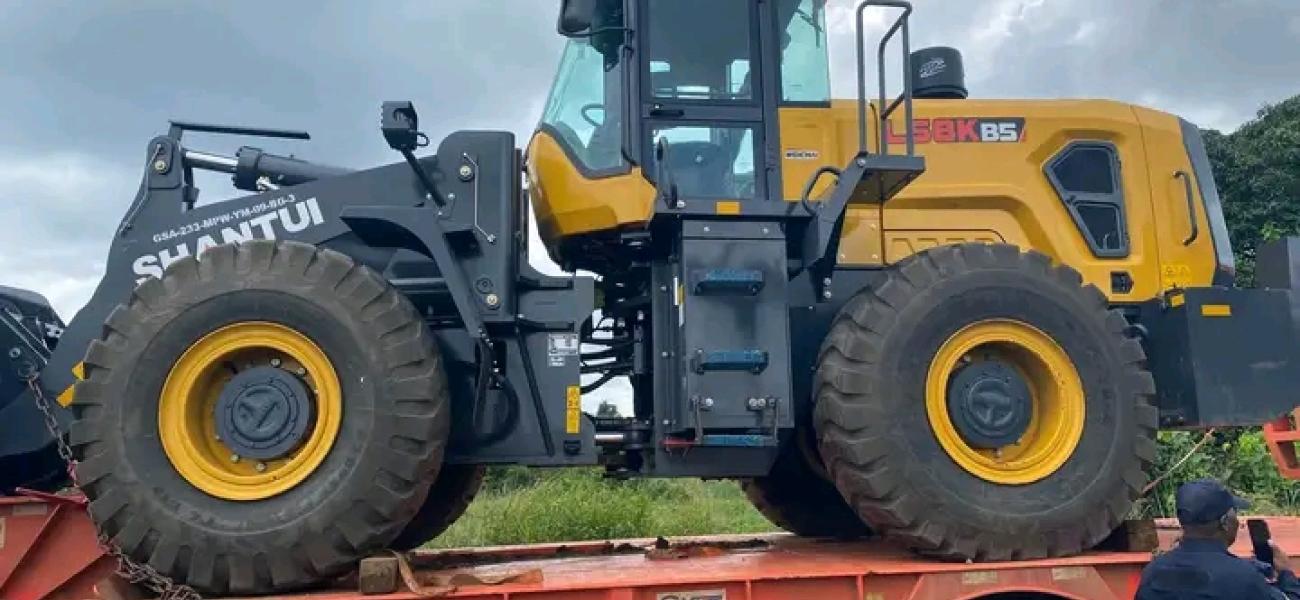
In a bid to incentivize excellence and foster healthy competition among local administrations, President Boakai disclosed that his government will introduce performance-based rewards for counties that demonstrate exemplary stewardship and maintenance of their assigned machinery. Counties that keep their fleets operational, meet road rehabilitation targets, and adhere strictly to servicing protocols will receive priority consideration for additional equipment allocations, expanded infrastructure grants, and technical upgrades in subsequent phases of the national development program.
The President cautioned that heavy-duty earthmoving equipment operates under extreme mechanical stress and requires disciplined, professional management to remain productive over a multi-year horizon. He warned that without regular lubrication, timely replacement of wear-and-tear parts, and adherence to load and operating limits, even the most robust modern machinery will rapidly degrade into costly scrap metal, thereby betraying the expectations of the Liberian people.
Reinforcing the need for institutional synergy, President Boakai called upon the Ministry of Public Works, the Yellow Machines Board of Authority (YMBOA), the SPPCC, county administrations, and all partner institutions to uphold the highest standards of transparency, efficiency, and operational discipline. He emphasized that clear lines of authority must govern how work orders are issued, how fuel and spare parts are requisitioned, and how completed road kilometers are verified, ensuring that the machines are used strictly for public infrastructure rather than unauthorized private projects.
Looking ahead, the President set a clear benchmark by which his administration and the public should judge the program's legacy. He emphasized that the true measure of success will not be found in the fanfare of Monday's launch ceremony or the sight of freshly painted machinery, but in the tangible condition of Liberia’s rural road network and the measurable improvement in household incomes, food production, and rural livelihoods five years from now.
During his remarks, President Boakai paused to pay tribute to the key figures and institutions whose behind-the-scenes dedication brought the project from conception to reality. He extended special recognition to Vice President Jeremiah Kpan Koung for his steadfast leadership and coordination, and paid solemn tribute to the late Minister of State for Presidential Affairs, Sylvester Grigsby, whose foundational administrative work helped steer the initiative during its early stages. He also commended Minister of State without Portfolio Mamaka Bility for her relentless logistical coordination, alongside the technical and operational contributions of the Ministry of Public Works, the Engineering Battalion of the Armed Forces of Liberia (AFL), the General Services Agency (GSA), and the entire SPPCC team.
Turning his attention directly to the workforce tasked with running the fleet—including heavy-equipment operators, diesel mechanics, civil engineers, hub managers, and logistics personnel—President Boakai urged them to approach their duties with patriotism, integrity, and technical professionalism. He reminded them that they are the custodians of vital public investments and encouraged them to take personal pride in every kilometer of road cleared, graded, and opened to traffic.
Equally, the President issued a direct appeal to ordinary Liberians, traditional chiefs, youth groups, and community watch teams across the country to serve as vigilant protectors of the equipment. Describing the 285 machines as sovereign national assets purchased to uplift every citizen regardless of political affiliation or geographic location, he urged communities to guard against theft, vandalism, fuel siphoning, and misuse, emphasizing that protecting the machines is synonymous with protecting their own economic future.
To underscore the inclusive, nationwide scope of the program, the launch ceremony featured a symbolic county-by-county roll call and allocation protocol covering all 15 counties to include: Grand Kru, Maryland, River Gee, Sinoe, Grand Gedeh, River Cess, Grand Cape Mount, Gbarpolu, Bomi, Montserrado, Margibi, Bong, Grand Bassa, Nimba, and Lofa. Representatives from each county witnessed the formal dedication of equipment earmarked for their respective regions, marking a unified national effort to ensure that historically marginalized southeastern and northwestern counties receive the same level of infrastructure attention as central corridors.
Declaring the initiative officially launched on Monday, November 16, 2026, President Boakai expressed profound optimism that the Yellow Machines will serve as transformative instruments of national progress—reconnecting isolated villages, revitalizing Liberia’s agricultural breadbaskets, lowering the cost of living, and expanding broad-based economic opportunities for generations to come.
As the equipment begins mobilizing toward the 19 regional hubs, the initiative stands as a cornerstone of Liberia’s drive toward self-reliance, promising to turn long-standing blueprints for rural connectivity and food security into tangible, enduring realities on the ground.