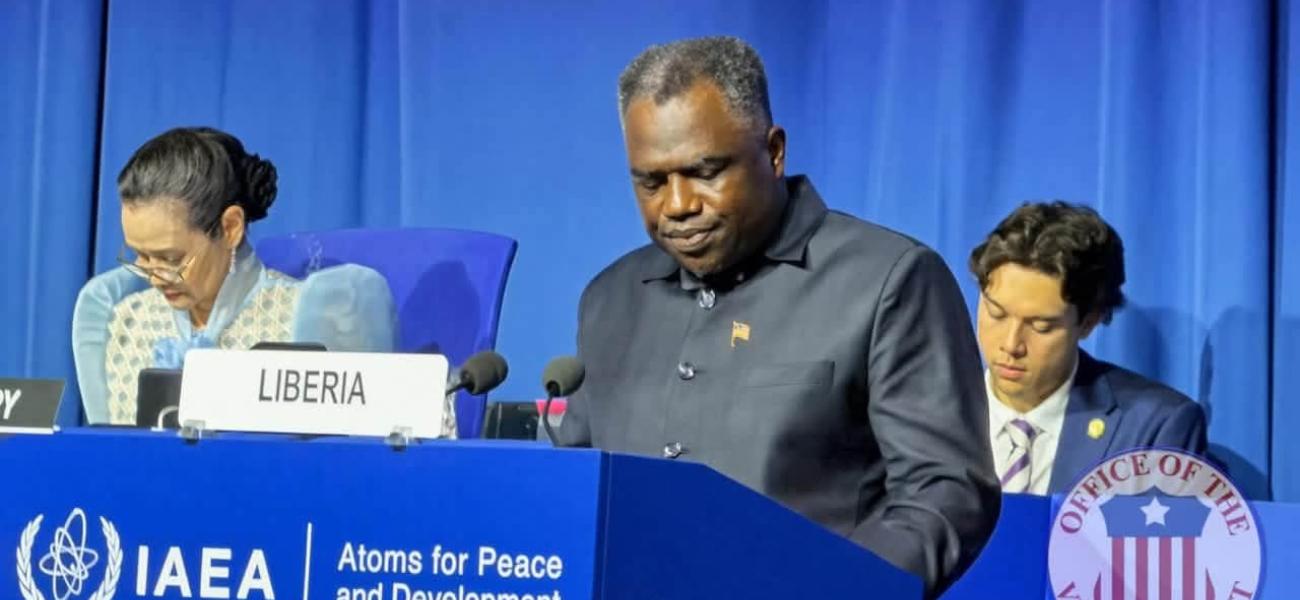
VIENNA, Austria — Liberia has issued a powerful call for greater and more equitable access to peaceful nuclear science and technology, emphasizing its potential to address some of the country's most urgent development challenges, from cancer to food insecurity.
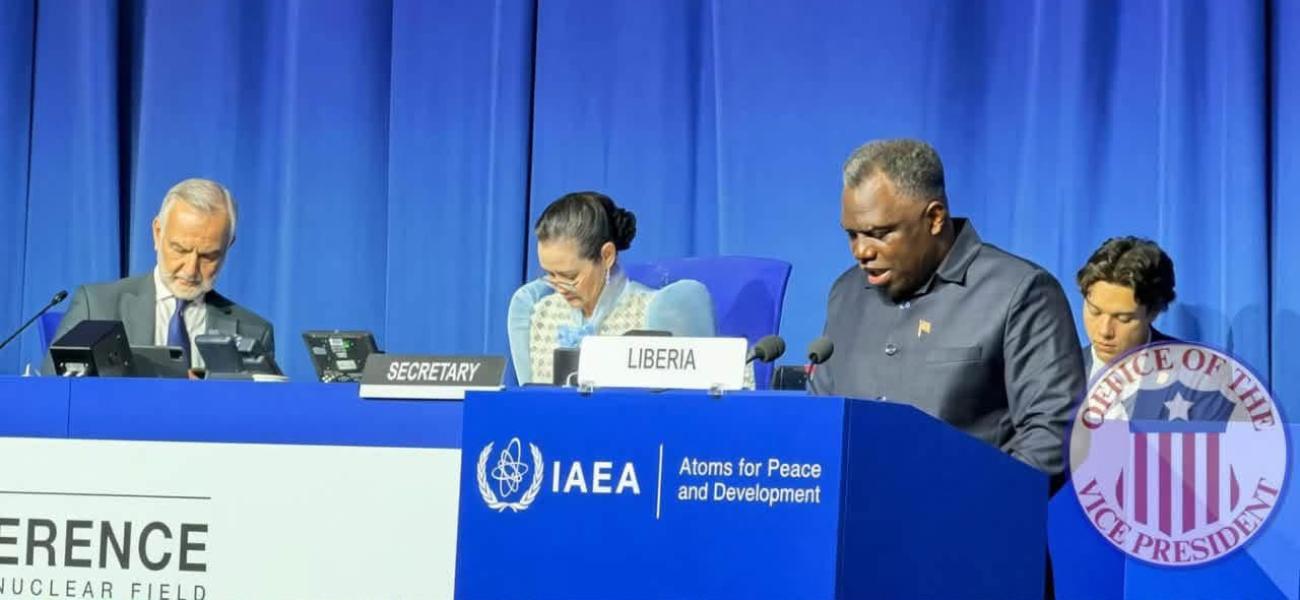
Delivering Liberia's National Statement on behalf of President Joseph Nyuma Boakai, Sr. at the 70th General Conference of the International Atomic Energy Agency (IAEA) in Vienna, Vice President Jeremiah Kpan Koung, Sr. reaffirmed Liberia's unwavering commitment to the safe, secure and peaceful application of nuclear science.
The high-level conference brought together vice presidents, ministers, scientists and nuclear energy leaders from over 170 member states to discuss how to harness nuclear technology for peace, health and prosperity.
At the heart of Liberia's message was a call for fairness and inclusion in global science.
Vice President Koung stressed that access to peaceful nuclear technology should not be determined by a country's geography or income level.
"We believe that access to peaceful nuclear technology must not be determined by geography or by national income. Its benefits must reach people in countries with the greatest needs."
He argued that while developed nations have long benefited from nuclear applications in medicine, agriculture and industry, many African countries, including Liberia, are still struggling to access basic diagnostic and treatment tools.
For Liberia, the call carries particular significance as the country seeks to strengthen its fragile healthcare system, improve agricultural productivity, protect the environment and build national capacity in radiation safety and scientific research.
A major and emotional focus of Liberia's statement was the country's growing cancer burden, which remains largely invisible due to limited diagnostic capacity.
Vice President Koung cited alarming data from 2024, showing approximately 4,217 new cancer cases and 2,745 cancer-related deaths in Liberia in a single year. Health experts believe the actual numbers could be much higher due to underreporting in rural areas.
He noted that Liberia currently has no comprehensive cancer center, forcing thousands of patients to travel abroad to Ghana, India or Morocco for treatment, a journey most families cannot afford, leading to preventable deaths.
In response, the Government, he disclosed, is mobilizing at least US$22 million toward the construction, equipping and sustainable operation of Liberia's first comprehensive cancer diagnosis and treatment center in Monrovia.
The facility is expected to include radiotherapy, chemotherapy, early screening services, and a specialized training unit for oncologists and medical physicists.
Liberia is also appealing for continued international support through the IAEA's Rays of Hope initiative, which seeks to expand access to cancer diagnosis and treatment, particularly in countries where such services remain limited or non-existent.
"The IAEA's Rays of Hope must reach countries where cancer patients have the least access to diagnosis and treatment," Koung told delegates.
For Liberia, the initiative represents more than an investment in medical infrastructure. It is an opportunity to expand access to life-saving technology and give cancer patients greater hope for early diagnosis, treatment and survival.
He thanked the IAEA for its past technical support and training of Liberian medical personnel and appealed for more scholarships, equipment and expert missions.
Beyond healthcare, Liberia is taking concrete steps to strengthen its regulatory framework for the peaceful use of nuclear technology.
Vice President Koung announced that Liberia has drafted a new comprehensive nuclear law aimed at strengthening radiation protection, regulatory oversight and the security of radioactive materials.
The proposed law will establish a fully empowered national regulatory authority that will be responsible for licensing, inspection, and enforcement of safety standards in hospitals, industrial sites and research institutions that use radioactive sources.
The framework is expected to support safer applications of radiation and nuclear technology while strengthening Liberia's ability to manage associated risks and meet its international obligations under IAEA safety standards.
Liberia also highlighted the role of nuclear science beyond medicine. Through IAEA-supported initiatives, the country is exploring applications in environmental monitoring and agriculture.
Among these efforts is the Atoms4Food initiative, which is supporting Liberia's plans related to crop improvement, livestock development, nutrition and agricultural value chains.
Through mutation breeding and isotopic techniques, Liberia hopes to develop higher-yielding, drought-tolerant rice and cassava varieties that can withstand climate change and boost food self-sufficiency.
Similarly, in environmental protection, nuclear techniques are being used to monitor water resources, track pollution in the Mesurado River and coastal areas, and assess the impact of climate change.
The approach reflects Liberia's broader effort to use science and innovation to improve food production, strengthen resilience and address nutritional challenges.
Vice President Koung further called for predictable and increased financing for the IAEA Technical Cooperation Fund, which remains the main vehicle for supporting developing countries.
He also called for equitable access for developing countries to specialized training, modern equipment and scientific knowledge, noting that without capacity building, technology transfer will not be sustainable.
For Liberia, access to technology must be accompanied by access to the expertise and institutional capacity needed to use that technology effectively and safely.
The message from Vienna therefore extends beyond nuclear technology itself: scientific progress must be inclusive, accessible and connected to the real needs of communities.
Turning Science Into Solutions for Liberians
Liberia's participation in the IAEA General Conference comes as the Government seeks to deepen international partnerships around national priorities — including healthcare, food security, environmental protection and scientific capacity.
Vice President Koung summarized Liberia's ambition with a firm commitment to transform international scientific cooperation into practical national benefits:
"We stand ready to work with the IAEA and all partners to translate scientific cooperation into cancer treatment, resilient agriculture, safer communities, the peaceful use of nuclear science, and renewed hope for our people."
HARDFACTS PERSPECTIVE
Liberia's message from Vienna places equitable access to science and technology at the center of national development. From cancer treatment and radiation safety to agriculture and environmental monitoring, the country is seeking to turn nuclear science from a specialized field of research into a practical tool for improving lives.
The challenge now is implementation — mobilizing resources, strengthening institutions, developing scientific expertise and ensuring that the benefits of these technologies ultimately reach the ordinary Liberian people in clinics, farms and communities.
For Liberia, the future of nuclear science is not about nuclear weapons. It is about using science responsibly to save lives, strengthen food systems, protect communities and build a more resilient and hopeful nation.