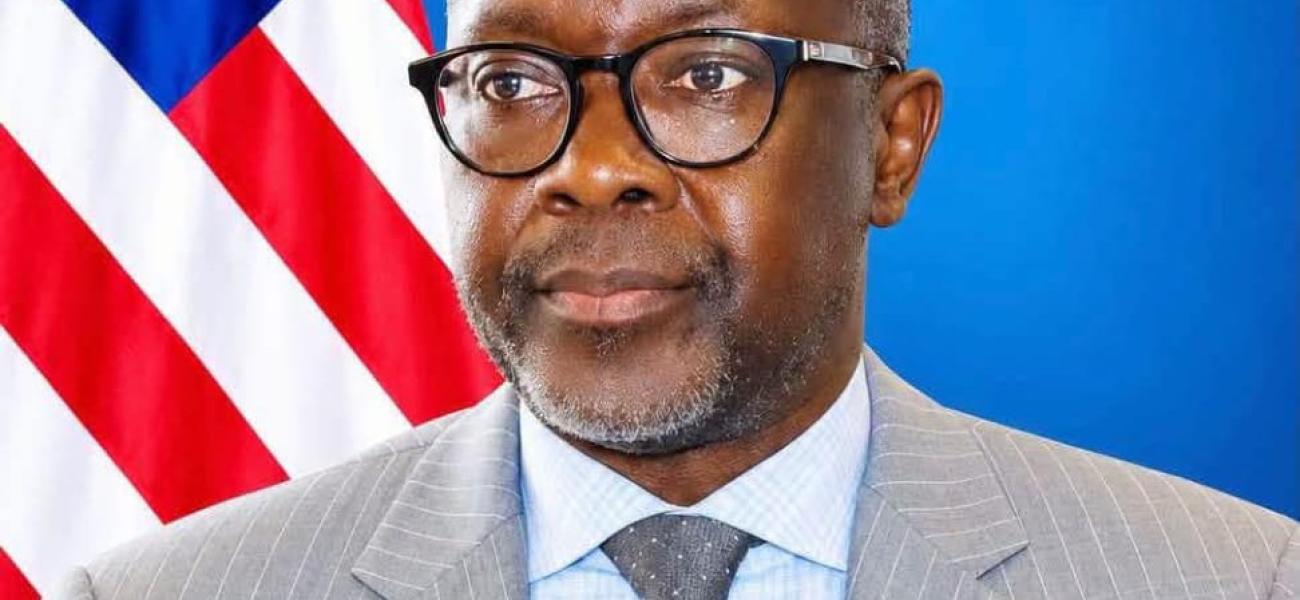
CAPITOL HILL, MONROVIA – Gbarpolu County Senator Amara M. Konneh has questioned the priorities of the proposed US$1.539 billion national budget for Fiscal Year 2027, warning that projected increases in tax revenue could place additional pressure on households and businesses while leaving insufficient resources for development.
In his assessment of the draft budget submitted by President Joseph Nyuma Boakai to the Legislature, Konneh challenged the government's revenue projections and spending priorities, calling for closer scrutiny of proposed tax measures, debt obligations and allocations to essential public services.
The proposed budget totals US$1.5389 billion, representing an increase of approximately US$236.25 million, or 18.1 percent, over the estimated US$1.303 billion fiscal envelope for 2026. The Ministry of Finance and Development Planning has described the proposal as a plan to accelerate implementation of the government's ARREST Agenda for Inclusive Development, with priorities including healthcare, education, infrastructure, employment and public-sector compensation. Finance Minister Augustine Kpehe Ngafuan, speaking at a November 9 press briefing, said domestic revenue collections had exceeded US$1 billion by September 2026. He also disclosed that government institutions had submitted funding requests totaling approximately US$3 billion, significantly exceeding available resources.
However, Konneh argues that the composition of the proposed revenue increase requires closer examination. According to Konneh, tax revenue is projected to rise by US$225 million to approximately US$1.072 billion, while non-tax revenue is expected to decline by US$164 million. This would leave core domestic revenue increasing by only about US$61 million, or 4.7 percent. He expressed particular concern over import taxes, which are projected to increase by 49.3 percent, from US$280.8 million to US$419.4 million.
The senator also questioned proposed tax measures, including the transition to Value Added Tax (VAT), mobile money-related charges and penalties associated with electronic receipts, warning that additional costs could affect consumers and businesses.
He urged lawmakers to demand a detailed explanation of the projected revenue growth, including the contributions expected from economic expansion, new tax measures and improved revenue collection.
Konneh's concerns extend beyond revenue generation to the government's expenditure priorities. Of the US$236.25 million increase in the proposed budget, he said only US$16.44 million, representing approximately seven percent, is earmarked for additional public investment through the Public Sector Investment Program. He estimated that nearly 79 cents of every budget dollar would go toward government operations and debt servicing, leaving approximately 21 cents for development investment.
Konneh similarly questioned proposed allocations for foreign travel, fuel, food, catering and intelligence services, arguing that government spending should produce measurable improvements in public services and citizens' living conditions. The senator also questioned whether proposed increases in health and education funding would adequately address longstanding challenges in frontline service delivery. The health-sector allocation is projected to rise from US$110.9 million in 2026 to approximately US$135.8 million in 2027.
However, Konneh argued that the increase does not sufficiently address the needs of hospitals and community health facilities. He said additional funding for drugs, laboratory consumables and medical supplies amounts to only about US$1 million, while much of the increased compensation funding is concentrated at the Ministry of Health in Monrovia. Education funding is projected to increase from US$143.6 million to approximately US$163.5 million. Despite the increase, the senator said allocations for educational materials, supplies and stationery for county schools are expected to decline by about US$200,000.
Konneh said the sector receives approximately 1.2 percent of the proposed national budget and pointed to a reduction in the allocation for the Central Agricultural Research Institute (CARI), from approximately US$290,000 in 2026 to US$31,000 in the proposed budget, as cited in his assessment. He argued that the level of funding is inconsistent with the country's need to strengthen domestic food production and reduce dependence on imported food.
His concerns come against the backdrop of an earlier request by Agriculture Minister Dr. J. Alexander Nuetah, who sought US$69 million for the Ministry of Agriculture in the 2027 budget to expand farmer support and strengthen agricultural extension services. The Agriculture Minister said Liberia needs approximately 436 agricultural technicians to serve its 109 agricultural districts but currently has only 138.
Konneh cited reported agricultural growth of 2.6 percent in 2025 and domestic food inflation of 11.1 percent in making the case for increased investment. He proposed that lawmakers consider gradually raising agriculture's share of the national budget to 10 percent over two years. The Gbarpolu lawmaker also challenged the distribution of development resources across the country's 15 counties. According to his assessment, approximately US$11.2 million is allocated for county development outside road construction, compared with more than US$106 million for road projects. He argued that rural communities require investments in schools, health facilities, markets, water systems and agricultural infrastructure, in addition to road construction. Konneh proposed increasing funding for county development outside roads to at least US$30 million, equivalent to approximately US$2 million per county.
Konneh said approximately US$2.55 million in clearly identified allocations is provided for local government, health and education in Gbarpolu. Of the US$1.37 million allocated to health, he said approximately US$1.2 million is earmarked for Emirates Hospital, also known as the Western Region Referral Hospital. That would leave about US$170,000 for 12 health centers across the county's six districts. The senator questioned whether the remaining amount would be adequate to support healthcare delivery across the county. He further noted that none of the 194 development projects listed in the proposed budget, valued at approximately US$328.5 million nationwide, specifically identifies Gbarpolu with a stated allocation.
He called for clearer project costing and budget codes for proposed developments, including a power plant, the Tubmanburg-Bopolu power line, and the Dakorta and Kpayekwelleh bridges. Konneh also raised concerns over the Bopolu City Streets project, which received US$2 million in the 2026 budget but has no allocation in the proposed 2027 budget, despite being listed for completion in 2027. According to the senator, the previous allocation has not been disbursed. He said he would push for the release of the funds before the current budget year ends.
Konneh said Liberia's broader public resource envelope stands at approximately US$1.736 billion when off-budget grants and loans are included, excluding more than US$356 million in revenue generated by state-owned enterprises. He also urged lawmakers to examine the proposed treatment of VAT refunds, arguing that the accounting arrangements could affect the accuracy of government revenue, expenditure and fiscal deficit figures.
The proposed budget is now before the Legislature for scrutiny and possible adjustment before passage. The Finance Ministry has maintained that the draft remains subject to legislative review and approval. Konneh said the issues raised in his assessment should be treated as preliminary questions for the budget hearings, rather than a final judgment on the government's spending plan.
He maintained that the ultimate test of the FY2027 budget should be whether it improves access to essential services, strengthens agricultural production, creates employment opportunities, and ensures a fairer distribution of development resources across Liberia's 15 counties.