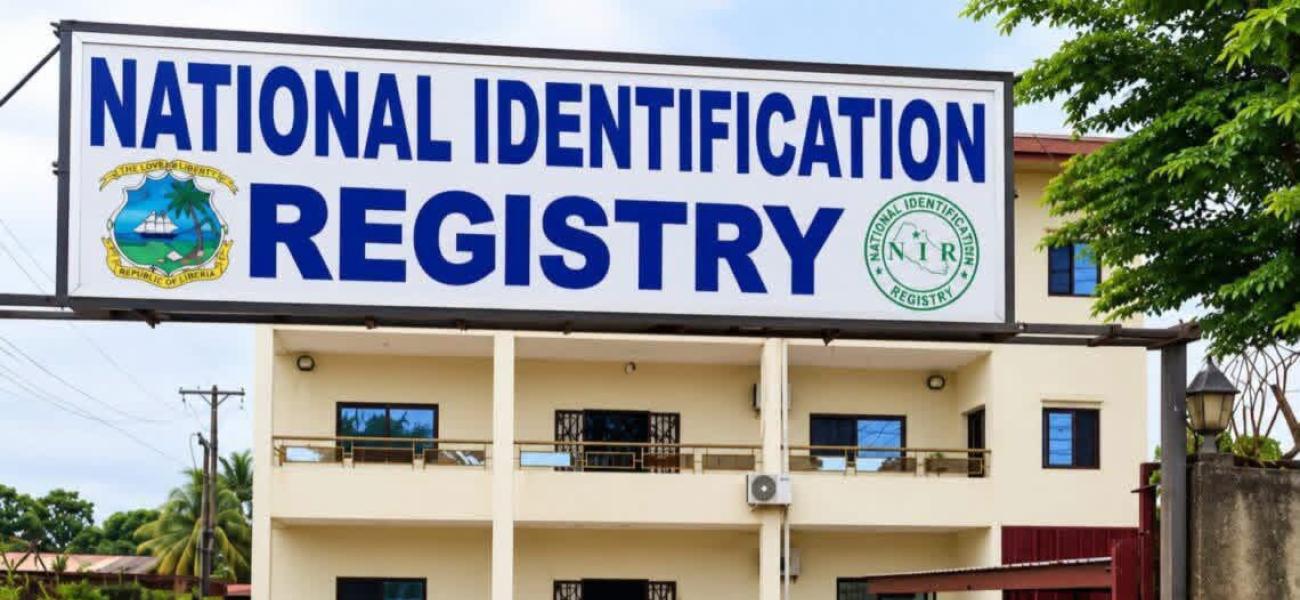
MONROVIA, LIBERIA — The National Identification Registry (NIR) has clarified that its much-publicized plan to issue free national identification cards will not be a blanket free-for-all for every Liberian, but will specifically target disadvantaged, vulnerable, and unemployed citizens who cannot afford to pay for the document.
The Executive Director of the National Identification Registry, Andrew Peters, made the clarification on Tuesday, September 15, when he spoke to journalists in Monrovia amid growing public debate and misconception about who qualifies for the free national ID card program.
According to Director Peters, the policy is designed as a pro-poor intervention to ensure that poor Liberians are not left out of the national biometric identification system because of financial constraints. He stressed that employed Liberians, business owners, and foreign residents living in Liberia will be required to pay a fee to obtain their national identification cards.
"The free national ID is for our disadvantaged and unemployed brothers and sisters. If you are employed and earning, and if you are a foreign resident, you will pay for it. That is how we can sustain the program," Peters said.
Peters disclosed that the NIR will need approximately US$54.7 million to fully implement the free national identification program for disadvantaged and underprivileged citizens across Liberia's 15 counties. He said the amount will cover the cost of enrollment, production, logistics, deployment of staff, and decentralization of the entire process to reach citizens in remote and hard-to-reach areas.
He explained that the national ID card is far more than just a piece of plastic. It is intended to be the single most important document that gives citizens easier access to essential public and private services, including healthcare, education, banking, business registration, SIM card registration, voting, and social protection programs, while at the same time creating a credible, traceable, and verifiable record of citizens across Liberia’s political subdivisions.
The NIR boss noted that a credible national identification database is critical for national planning, security, revenue mobilization, and economic development, adding that Liberia cannot continue to run its systems without knowing who its citizens are, where they live, and how to identify them.
On the timeline for implementation, Director Peters said full implementation of the free ID program will begin immediately once the financing agreement currently before the National Legislature is ratified by lawmakers. He said the NIR has already begun preliminary mapping of counties as part of efforts to decentralize its operations and make the registration process more accessible to citizens across the country, rather than forcing everyone to come to Monrovia.
As part of its decentralization plan, the NIR intends to establish enrollment centers in all 15 counties, with mobile teams to be deployed to districts and towns to capture citizens who cannot travel long distances.
Meanwhile, Peters has dismissed growing public concerns and fears that citizens’ personal information and biometric data could be exposed to or misused by OSD, the private company financing the enrollment process.
Addressing those concerns, Peters clarified that OSD’s role is strictly limited to investing in Liberia’s information and communications technology (ICT) infrastructure and providing the technical and financial backing for the rollout. He emphasized that the NIR itself will be solely responsible for conducting the registration process, managing the database, and retaining full custody and control of citizens’ personal data.
"OSD is investing in our ICT infrastructure. The registration and the data belongs to the NIR and to the Government of Liberia. No private company will have access to use the personal information of our citizens," Peters assured.
He called on Liberians to support the national ID process and to see it as a national development tool that will benefit everyone, while assuring the public that the NIR will maintain the highest standards of data protection and privacy.
The national ID program is seen as a cornerstone of the government's digital transformation agenda, aimed at formalizing the economy and ensuring every Liberian is counted and included.