
Temple of Justice, Monrovia –Criminal Court 'C' at the Temple of Justice in Monrovia is expected to rule on Friday, November 13, 2026, on a motion for a new trial filed by defendants in the high-profile Saudi-donated rice case, following jury verdicts that found eight of the 13 accused guilty of diverting humanitarian rice. The crucial hearing is scheduled for 1:00 p.m. Friday, according to a statement released Thursday, November 12, by the Assets Recovery and Property Retrieval Task Force (AREPT), the anti-corruption task force prosecuting the case. The Task Force said the hearing will address the defense's request for a new trial before the court proceeds with its final ruling and sentencing, where applicable. The decision of Judge Ousman F. Feika will determine whether the guilty verdicts stand and the court moves to sentencing, or whether the entire case will be retried before a new jury.
On October 9, 2026, after weeks of testimonies and presentation of documentary evidence, a 12-member jury found eight of the 13 defendants guilty in connection with the alleged criminal diversion, theft and illegal sale of rice donated by the Kingdom of Saudi Arabia for disaster victims and vulnerable communities across Liberia. Three defendants were acquitted and discharged by the jury for lack of sufficient evidence linking them to the crime, while the jury failed to reach a unanimous verdict on the remaining two defendants, resulting in a hung jury for those two accused persons. The split verdict – 8 guilty, 3 not guilty, 2 hung – highlighted the complexity of the case and the careful deliberation of the jury, which had to evaluate the role of each of the 13 defendants, many of whom were public officials, warehouse managers, and private business people accused of conspiring to divert the humanitarian consignment.
Following the verdicts, defense lawyers immediately filed a motion for a new trial, arguing that the jury's verdict was against the weight of the evidence, that there were procedural errors during the trial, and that their clients did not receive a fair trial. The motion, which is common after guilty verdicts in Liberia's criminal justice system, was formally heard by Judge Feika on November 6, 2026, with both prosecution and defense making extensive legal arguments.
At the heart of the case is 29,412 bags of rice, valued at approximately US$500,000, which were donated by the Kingdom of Saudi Arabia through the King Salman Humanitarian Aid and Relief Center to the Government of Liberia to help disaster victims, flood-affected families, and other vulnerable people across Liberia. According to the indictment, the rice, which arrived in the country in early 2025 and was entrusted to the National Disaster Management Agency (NDMA) and other agencies for distribution, was instead allegedly diverted, re-bagged, and sold on the Liberian market by a network of individuals working in collusion with some officials .The alleged diversion sparked public outrage, with many Liberians and international partners questioning how humanitarian assistance meant for the most vulnerable could be stolen. The Saudi Government had donated the rice as a gesture of solidarity with Liberia, and its alleged misuse was seen as a betrayal of that goodwill and an embarrassment to the country.
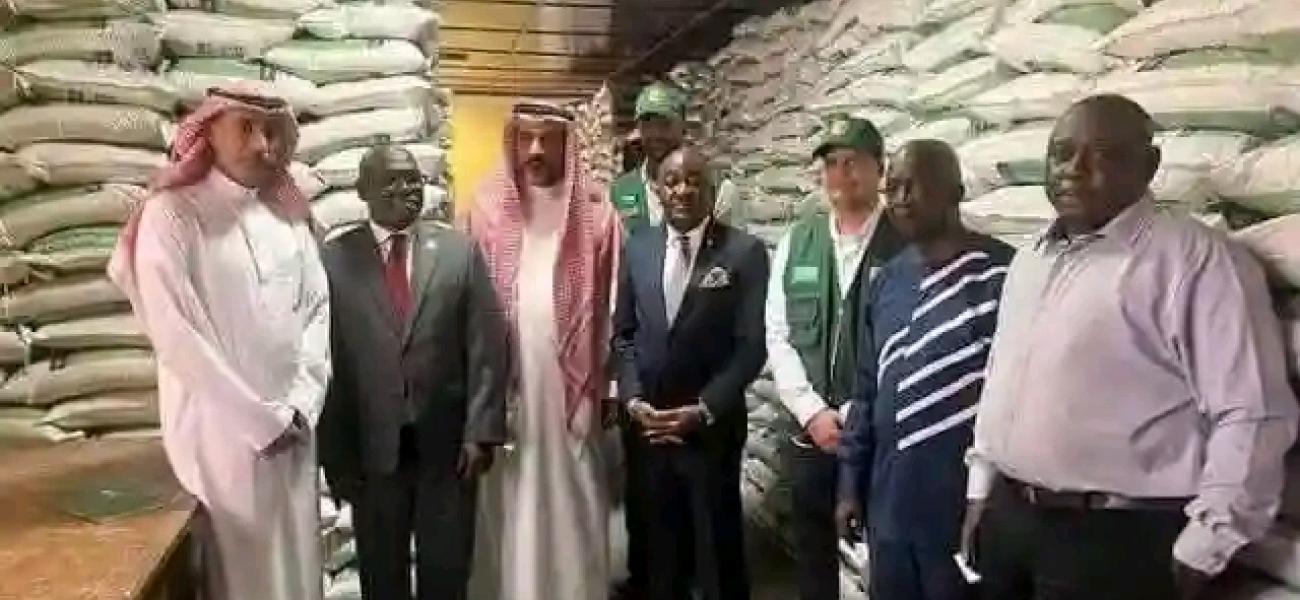
AREPT, which was established by President Joseph Nyuma Boakai with a mandate to trace, recover, and retrieve stolen public assets and illegally acquired properties, took over the investigation in collaboration with the Liberia National Police and the Ministry of Justice.
All eyes will now be on Court 'C' Friday at 1 p.m. If Judge Feika denies the motion for new trial, he will proceed to uphold the jury verdict and move to sentencing for the eight convicted defendants, where they could face significant prison terms, fines, and restitution orders. If he grants the motion, the guilty verdicts will be set aside and the case will be scheduled for a fresh trial before a new jury, prolonging one of the most closely watched corruption cases of 2026.
In its Thursday statement, AREPT said it remains committed to ensuring that the case is handled in keeping with the law and that those responsible for the misuse of public and humanitarian resources are held accountable. The Task Force also said it will continue working with the Ministry of Justice to pursue the recovery of public assets and ensure accountability in the management of donated resources, stressing that humanitarian donations must reach their intended beneficiaries. The ruling Friday is expected to attract a large crowd of journalists, civil society activists, and concerned citizens to the Temple of Justice