
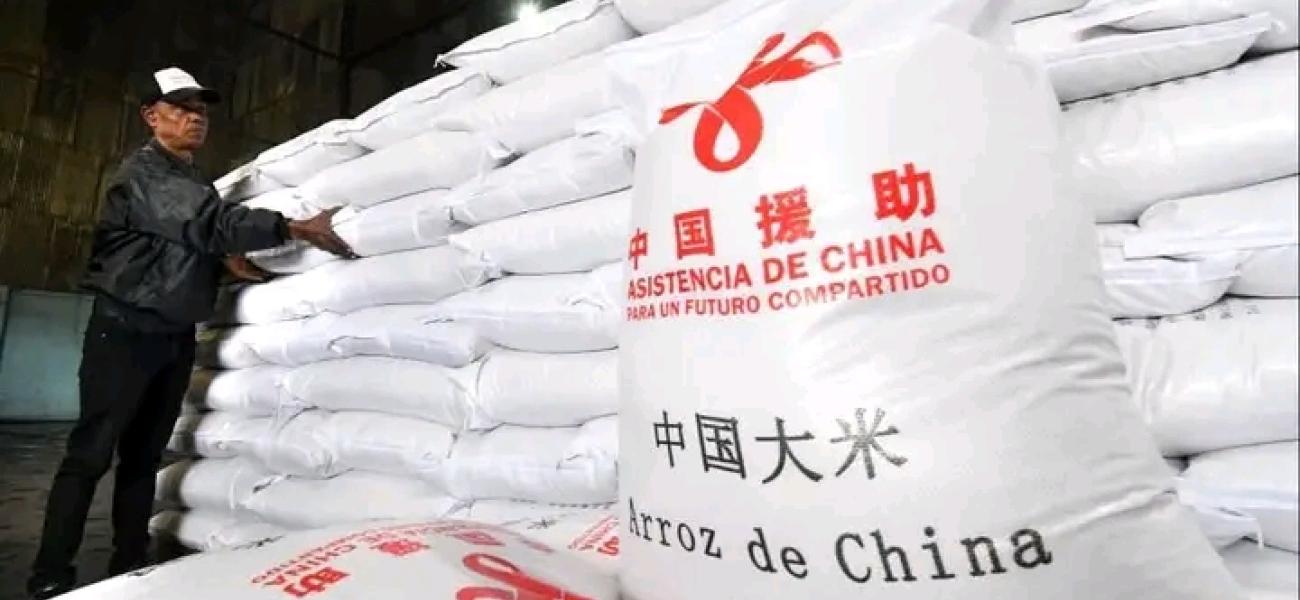
MONROVIA, Liberia — The People’s Republic of China has announced plans to provide Liberia with a new tranche of emergency food assistance valued at RMB 20 million—approximately US$3 million—in a move aimed at bolstering national food security and alleviating supply pressures across the West African nation.
The pledge was unveiled by Chinese Ambassador to Liberia, Yin Chengwu, during a comprehensive media briefing held at the Chinese Embassy in Monrovia on November 11, 2026. Addressing members of the press corps, Ambassador Yin confirmed that logistical and administrative preparations are actively underway to dispatch this fresh batch of emergency rice assistance to Liberia, which continues to navigate persistent agricultural production bottlenecks and rising food import costs.
Rice remains the undisputed staple food of Liberia, forming the daily caloric foundation for nearly all households across its 15 counties. However, domestic paddy production has historically fallen short of national consumption demands, leaving the country heavily reliant on foreign imports and vulnerable to global supply chain disruptions, climate variability, and price fluctuations. By stepping in with a US$3 million emergency allocation, Beijing seeks to help stabilize local market supplies, cushion vulnerable families against food inflation, and support the Liberian government's broader social protection efforts.
During the November 11, 2026 briefing, Ambassador Yin situated the emergency food grant within the wider framework of Sino-Liberian bilateral development cooperation, emphasizing that immediate humanitarian relief is being paired with long-term structural investments designed to help Liberia achieve agricultural self-sufficiency. Rather than relying solely on short-term food aid, the Chinese Embassy highlighted a multi-pronged strategy encompassing mechanized farming, technical capacity building, infrastructure development, and healthcare support.
A cornerstone of this long-term agricultural push was realized at the end of October, when the Chinese government officially handed over 304 units of modern agricultural machinery and farming equipment to the Government of Liberia. The high-profile handover ceremony was attended by Liberian President Joseph Nyuma Boakai, whose administration has placed agriculture and food security at the center of its national development agenda, the ARREST Agenda for Inclusive Development (AAID). The donated fleet—which includes tractors, power tillers, rice harvesters, and processing equipment—is intended to transition Liberian smallholder farmers away from labor-intensive subsistence methods toward commercial-scale, mechanized cultivation.
Beyond heavy machinery, Ambassador Yin also spotlighted grassroots technical cooperation initiatives currently yielding tangible results in rural communities. Specifically, he pointed to the ongoing China-aided technical assistance project focusing on bamboo and rattan weaving, fruit and vegetable cultivation, and modern livestock production. Operating through targeted demonstration hubs, Chinese agricultural experts are working directly alongside local farmers in Bong and Bomi counties, supplying participating households with essential agricultural inputs, improved seeds, tools, and hands-on training. The program aims to diversify rural incomes, improve household nutrition, and equip local communities with sustainable agribusiness skills that can be replicated nationwide.
According to officials at the Chinese Embassy, these layered interventions ranging from immediate emergency rice shipments to mechanized farming fleets and county-level technical workshops are designed to reinforce one another. While the US$3 million rice donation addresses urgent, near-term nutritional needs, the machinery and technical transfer programs target the root causes of low agricultural productivity.
The latest announcement underscores the deepening diplomatic and economic ties between Beijing and Monrovia, following high-level engagements between the two nations over the past year. As Liberia works to revitalize its post-war economy, modernize its farming sector, and build resilience against economic shocks, China remains one of its primary development partners across critical sectors including road infrastructure, public health, education, and human resource development. Further details regarding the exact tonnage of the rice shipment and the timeline for its arrival at the Freeport of Monrovia are expected to be finalized by relevant ministries from both governments in the coming weeks.