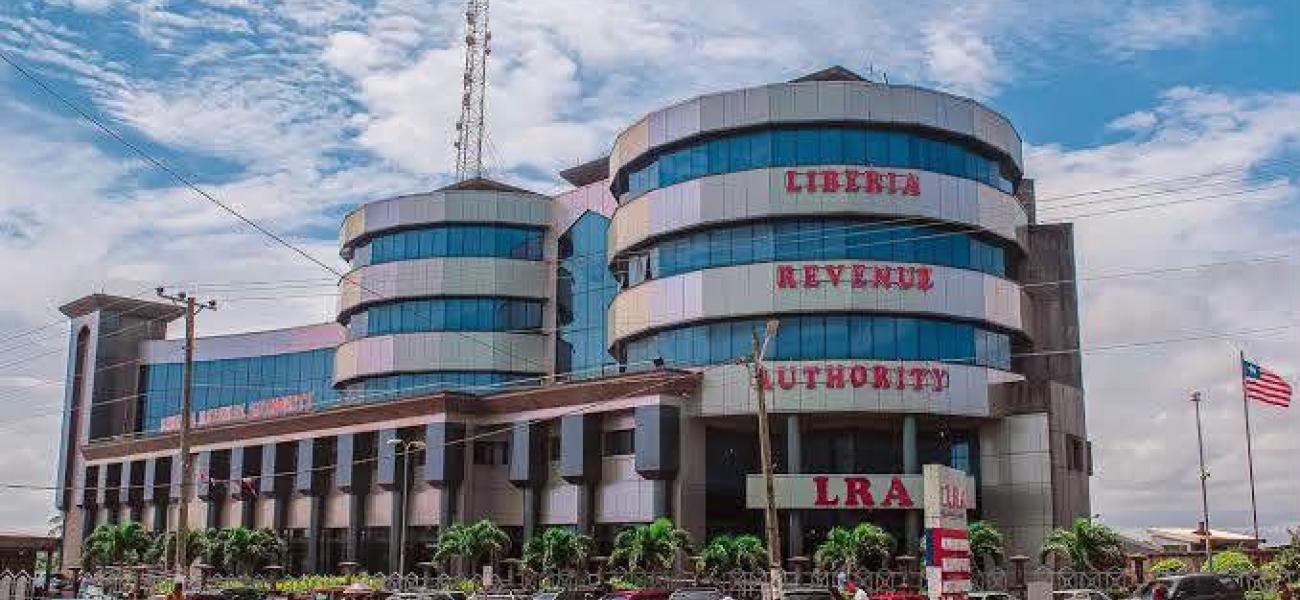
The Liberia Revenue Authority (LRA) has raised more than US$1 billion in domestic revenue, marking what has been described as a historic milestone for Liberia's economic governance and fiscal management.
According to a congratulatory flyer issued on the official website of the LRA in recognition of the achievement, Liberia has made history with "the country's first collection of one billion United States dollars in revenue." The flyer congratulated the Liberia Revenue Authority on the milestone and listed the "Actual Amount Collected (Consolidated-USD)" as US$1,000,479,141.45 as of September 14.
This achievement means Liberia has, for the first time in its history, crossed the one billion dollar threshold in purely domestic revenue collection without including donor grants and external borrowing.
The LRA's original domestic revenue target for fiscal year 2026 was $1.176 billion, roughly $1.2 billion, within an initially approved national budget of about $1.25 billion. The authority has since referred to a revised $1.3 billion domestic revenue target as collections continued to perform above projections.
It is important to clarify that Monday's prospective milestone concerns revenue performance and actual cash collected, rather than approval of a new billion-dollar budget. It reflects taxes and customs duties actually paid by businesses, concession companies and individuals.
The domestic tax and customs figures currently stand at $967.69 million, leaving a $29.75 million difference that appears to include carryover and other consolidated adjustments to reach the $1 billion mark.
The LRA's August account puts 2025 revenue at $848 million, up from $699 million in 2024 — an increase of about 21% before this year's major concession payment. The jump to over $1 billion in 2026 therefore represents a nearly 43% increase in just two years.
"By September 2026, we will hit the $1 billion mark in domestic revenue," Finance Minister Augustine Kpehe Ngafuan boldly predicted at the launch of the authority's strategic plan earlier this year. He also called for sustaining collections above that threshold to fund national development.
His prediction has now become reality, underscoring growing confidence in Liberia's revenue administration reforms.
The IMF's third review of Liberia's economic program estimated that tax revenue rose to 15.9% of gross domestic product in 2025, from 14.5% in 2024 — a sign that Liberia is finally improving its tax-to-GDP ratio, which is key to long-term sustainability.
In August, the LRA reported deploying its automated customs system to 11 of 17 customs offices and its integrated tax administration system to five of 18 tax offices across the country.
Expanding those systems could make payment easier for taxpayers and strengthen the government's ability to identify liabilities and follow up on unpaid taxes, reducing leakages and human interference.
Still, the size and timing of this year's advance cannot be explained without ArcelorMittal, Liberia's largest iron ore concession company.
The IMF confirmed that a mining company paid a one-time $200 million concession fee in March 2026. ArcelorMittal's January announcement of its amended Mineral Development Agreement identifies that amount as payment for an extension of mining rights and reserved railway capacity.
The agreement extends to 2050, with a right to renew for another 25 years, securing Liberia's long-term partnership with the steel giant.
That single payment is equivalent to roughly one-fifth of the dashboard's $997.43 million total. Subtracting it leaves about $797.43 million on the same accounting basis from regular tax handles.
The payment represents a substantial return secured from a major concession. Its fiscal character matters, however: Liberia received money for rights extending far beyond the current budget year. It cannot assume that the same payment will arrive annually to support permanent spending commitments.
ArcelorMittal said its expansion would increase annual iron ore shipments from about 5 million metric tons to 20 million in 2026. If sustained, higher production could broaden the base for royalties and other payments.
The eventual public return will depend on global iron ore production, prices, operational costs, and the agreement's fiscal terms.
An additional metric reported by The Liberian Investigator shows how heavily large mining operators feature in the recorded inflows. It lists about $270.97 million for ArcelorMittal and $100.75 million for Bea Mountain Mining Corporation across their appearances in monthly top-10 taxpayers rankings.
Together, those entries total $371.71 million, equivalent to more than one-third of the headline domestic revenue tally. Bea Mountain appears in all nine monthly reporting periods, including the partial September period, showing consistency in payments.
Orange Liberia's listed entries total $28.35 million, while petroleum businesses and other commercial operators also contribute substantial amounts, highlighting the role of telecoms and fuel importers.
In its July assessment, IMF staff projected 5.5% economic growth for 2026, driven by mining, construction and manufacturing, and said fiscal results continued to exceed program expectations.
It identified the planned introduction of value-added tax (VAT) in 2027 and mining tax reforms as critical to sustaining domestic revenue beyond one-off concession payments.
Those reforms matter because reaching $1 billion once and making it a dependable annual foundation require different things. A large concession payment can bring a milestone forward. Maintaining the gains requires a broader, more productive economy and a tax system that collects consistently and fairly.
The World Bank's newly released Liberia Public Finance Review identifies considerable room for improvement. It estimates a tax compliance gap of about 3% of GDP and projects that combined revenue and spending reforms could generate annual fiscal gains equivalent to 3.9% to 5.3% of GDP by 2029-30.
Those are potential gains from implementation, not money immediately available for spending.
According to the report, capital budget execution averaged just 33% between 2018 and 2025. The historical weakness suggests that collecting more money will have limited impact unless government agencies can prepare, procure and complete the investments it is meant to finance.
For now, however, Liberia can celebrate a historic first — crossing the US$1 billion domestic revenue mark, a psychological and fiscal barrier that past governments failed to breach.