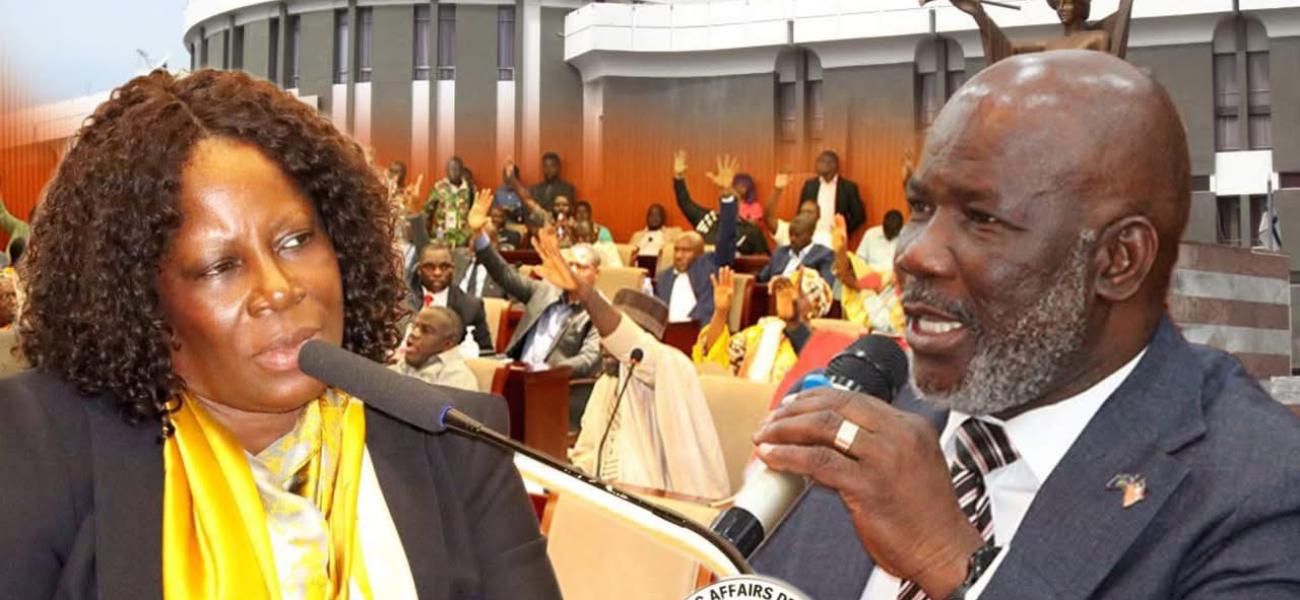
Capitol Hill, Monrovia –The 55th Legislature will officially resume legislative duties on Friday, October 9, 2026, marking the beginning of a critical period on Capitol Hill as lawmakers prepare to receive and act on the Draft National Budget for Fiscal Year 2027.
The resumption, which falls on the second working Friday of October, is coming at a defining moment in Liberia’s fiscal calendar — a period when the Legislature assumes its central constitutional role as custodian of the public purse.
According to legislative sources, the October sitting will immediately shift focus to the Executive’s expected submission of the FY2027 budget, in line with Liberia’s public financial management laws.
Under Article 34(d) of the 1986 Constitution, the Legislature is empowered to levy taxes, raise revenues, borrow money and appropriate funds for the governance of the Republic. The Constitution is explicit that no money shall be drawn from the National Treasury except by legislative appropriation and upon warrant of the President.
This provision makes the annual budget process the single most powerful oversight function of the Legislature.
Both chambers — the House of Representatives and the Liberian Senate — will be involved through plenary debates, joint committee hearings, public scrutiny and final passage of the Appropriation Act.
Section 17.1 of the Amended and Restated Public Financial Management (PFM) Act requires that the Executive submit the proposed National Budget to the Legislature at least two months before the end of the fiscal year.
Since Liberia’s fiscal year runs from January 1 to December 31, the deadline for submission of the FY2027 budget is October 31, 2026.
The October 9 resumption therefore gives lawmakers a three-week window to organize their internal mechanisms, constitute joint budget committees, and prepare for what is traditionally the most rigorous scrutiny of the legislative year.
The Ministry of Finance and Development Planning has already laid the groundwork. Budget Call Circular One for FY2027 was issued on August 17, 2026, signaling the start of Executive budget formulation, sector consultations and resource envelope planning.
Once President Joseph Nyuma Boakai’s administration formally transmits the draft budget, the Legislature will trigger its established budget process:
Revenue Hearings: Usually held behind closed doors, lawmakers examine revenue projections, domestic tax measures, external grants, loans and other income streams. This determines whether the government’s spending plan is realistic.
Expenditure Hearings: Opened to the public and press, ministries, agencies and commissions (MACs) will appear to defend their proposed allocations for salaries, operations, and development projects under the Public Sector Investment Plan (PSIP).
Committee Scrutiny: The House Committee on Ways, Means, Finance and Budget, and the Senate Committee on Finance and Budget, along with the Joint Committee on Public Accounts and Expenditure, will dissect recurrent expenditures, debt servicing, statutory obligations and capital projects.
Lawmakers are expected to make adjustments where necessary, provided such changes are constitutionally and procedurally permissible.
While both chambers must pass the budget, the Constitution requires that all revenue and financial bills originate in the House of Representatives, with the Senate empowered to propose or concur with amendments.
Article 3 of the Constitution establishes three separate but coordinate branches of government. The budget process is the clearest expression of that principle — the Executive proposes, the Legislature appropriates and oversees, and the Judiciary interprets.
The quarterly sitting arrangement being used by the 55th Legislature should not be confused with Article 32, which provides that the Legislature shall assemble in regular session once a year on the second working Monday in January. The quarterly system is an internal administrative mechanism to manage legislative workload, oversight, constituency engagements and appropriations.
As October 9 approaches, anticipation is high among civil society, development partners, private sector actors and ordinary Liberians, whose access to healthcare, education, roads, security and other services depends on how resources are allocated in FY2027.
With the statutory deadline of October 31 fast approaching, the return of lawmakers this Friday will set the stage for the most consequential legislative exercise of 2026 — the debate, amendment, and passage of Liberia’s FY2027 National Budget.